The Best Vendor Compliance Guide for Property Management Teams
Vendor compliance in property management is not a documentation task. It is the entry point of vendor risk control.
An uninsured contractor, an expired license, or a missed safety requirement does not create isolated risk. At portfolio scale, these gaps compound across properties, vendors, and transactions, turning small oversights into systemic exposure.
Most property management teams treat compliance as document verification. This approach fails because risk is not introduced when documents are missing. It is introduced when compliance is not enforced across onboarding, active work, and renewal.
Vendor compliance identifies risk. Vendor lifecycle control prevents it.
This is the foundation of Compliance-Led Vendor Management, in which compliance is continuously enforced across the vendor lifecycle to eliminate risk before it impacts operations, finances, or owner confidence.
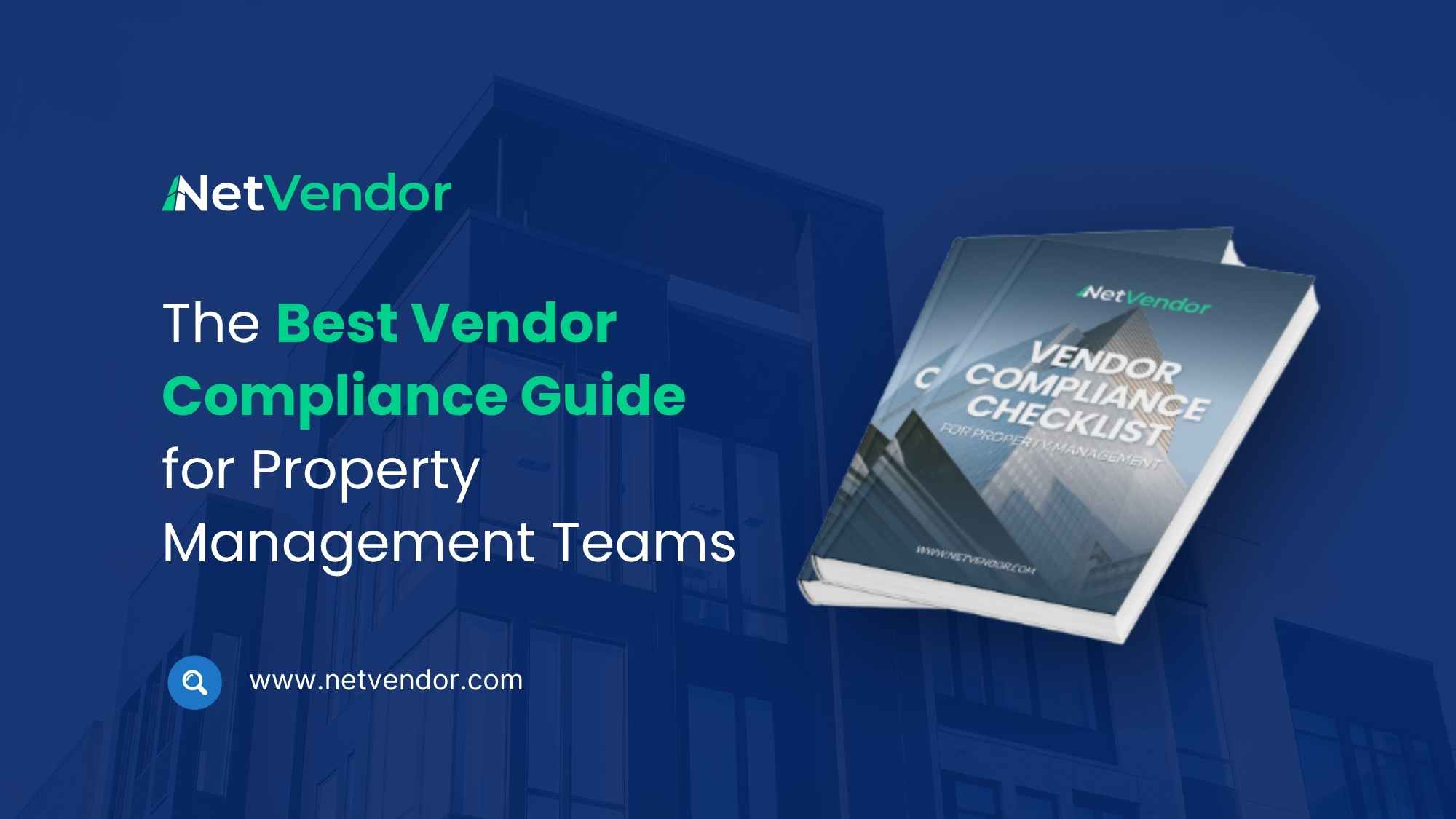
Need a quick way to audit your current compliance process? Download the Vendor Compliance Checklist for Property Managers.

What Is Vendor Compliance in Property Management?
Vendor compliance is the process of verifying and continuously monitoring that vendors meet required insurance, licensing, safety, and contractual standards before and during work on a property.
It is not a one-time verification. Without continuous enforcement, compliant vendors can become non-compliant during active work, reintroducing risk into the portfolio.
What Is Vendor Lifecycle Control?
Vendor lifecycle control is the continuous enforcement of vendor requirements across onboarding, active work, and renewal. It ensures compliance is not just verified, but maintained in real time across the portfolio.
Vendor Compliance vs Vendor Management
Vendor compliance verifies that vendors meet minimum requirements. Vendor management controls how vendors are sourced, approved, monitored, and enforced across a portfolio as part of a complete vendor management framework designed to prevent risk at every stage of the vendor lifecycle.
The difference:
- Compliance checks documents
- Vendor management controls behavior and risk
Most property teams operate at the compliance layer. Risk enters after vendor approval when enforcement stops.
Compliance-Led Vendor Management closes this gap by enforcing compliance across the full vendor lifecycle, not just at onboarding.
This model defines vendor management as lifecycle control rather than document verification.
Vendor Compliance Is the First Line of Defense for Property Teams
Vendor compliance protects property management companies from legal, financial, and reputational risks. When vendors lack proper insurance, licenses, or safety practices, the liability often falls on the property management company.
For example, an uninsured contractor can leave your PMC paying out of pocket, while unsafe vendors erode trust between tenants and owners. Compliance stops these risks before they start. It is the first line of defense for every property team.
Most compliance failures are not visible at the document level. They occur during active work, not during document collection.
Manual vendor compliance reviews increase the risk of missed insurance expirations and documentation gaps, especially when tracking COI expirations across multiple properties without centralized control.

What Vendor Compliance Really Means in Property Management
Vendor compliance in property management means ensuring that all vendors meet the legal, financial, and operational standards required to work on a property.
- Insurance, licensing, and certifications: Vendors must provide up-to-date Certificates of Insurance (COIs), state licenses, and trade certifications before approval. Many teams still rely on spreadsheets and email reminders, which fail at scale.
- Health, safety, and environmental standards: Vendors must comply with applicable occupational safety and environmental regulations to protect tenants and staff.
- Accessibility, tenant rights, and local regulations: Compliance also extends to accessibility requirements, privacy considerations, and tenant protection regulations.
Without clear compliance checks, property managers risk non-compliance with state laws, local safety codes, or tenant rights, exposing properties to preventable disputes.
Why Vendor Compliance Fails at Scale
Vendor compliance breaks down at scale because it is managed as a static checklist instead of a continuously enforced system. As portfolios grow, three failure points emerge:
- Fragmented systems across properties and PMS platforms
- Manual tracking of insurance and license renewals
- Lack of enforcement during active vendor work
Without lifecycle control, compliance becomes reactive, and risk accumulates silently across the portfolio. Documents are collected at onboarding, but risk re-enters through expiration, non-compliant work, and lack of compliance automation during active work.
How Vendor Risk Compounds Across a Portfolio
Vendor risk does not exist at the property level. It aggregates across all vendors, properties, and transactions.
A single expired COI or missing license is a contained issue. Across a portfolio, these gaps compound into systemic exposure, including:
- Insurance lapse exposure across multiple properties
- Inconsistent vendor enforcement across regions
- Increased legal and financial liability
- Loss of owner trust at scale
This is why vendor compliance cannot be managed locally. It must be enforced at the portfolio level.
Common Vendor Risks Property Managers Must Address
The most common vendor risks in property management include inadequate insurance, expired licenses, weak safety practices, and poorly defined contracts.
These risks are controlled through structured compliance enforcement:
- Inadequate insurance coverage → Always collect and verify COIs. Don’t accept expired or incomplete documentation. Insurance compliance is one of the most effective safeguards against liability. This prevents insurance lapse exposure, one of the most common sources of financial risk in property management portfolios.
- Outdated or missing licenses → Establish a standard onboarding checklist for required trade licenses, renewing annually.
- Poor safety practices → Require vendors to comply with Occupational Safety and Health Administration (OSHA) standards and conduct periodic site audits.
- Weak contracts → Contracts must clearly define liability, indemnification, and performance standards to prevent disputes
Most of these risks are preventable, but only when compliance is enforced continuously rather than verified once. These risks do not exist in isolation. Across a multi-property portfolio, small compliance gaps compound into aggregated financial and legal exposure.

Building A Vendor Compliance Program That Works
A strong vendor compliance program controls the full vendor lifecycle, from onboarding through active work and renewal. Without lifecycle enforcement, compliance programs reduce administrative friction but do not reduce risk.
- Vendor onboarding best practices: Require insurance, licenses, COIs, and safety documentation up front. Automate collection where possible to reduce admin workload.
- Ongoing document monitoring and renewals: Compliance isn’t one-and-done. Insurance policies, certifications, and licenses expire. Regular monitoring prevents gaps.
- Audits, reporting, and continuous improvement: Conduct periodic compliance audits to identify weak points. Transparent reporting keeps owners informed and supports accountability.
- Work execution enforcement: Compliance must extend beyond onboarding. Vendors must remain compliant while work is being performed, not just when they are approved.
Most vendor compliance software focuses on document collection. This solves the administrative burden but does not eliminate risk. Risk is eliminated through continuous enforcement across the vendor lifecycle.
NetVendor enforces compliance across the vendor lifecycle rather than limiting control to document tracking. From onboarding through active work and renewal, vendors cannot operate within the portfolio unless they meet defined compliance standards.
Vendor Compliance Software: What To Look For
Most tools labeled as vendor compliance software focus on organizing documents and sending alerts. This improves organization but does not eliminate risk exposure. These systems manage documents, not compliance enforcement during active work.
Most tools labeled as vendor compliance software are document-only tools. The distinction matters at portfolio scale.
NetVendor is designed to enforce compliance, not just track it. The platform consolidates compliance into one place for property management companies, featuring real-time dashboards, automated alerts, and seamless vendor onboarding. This distinction defines whether risk is reduced or simply organized.
Tracking documents reduces administrative work. Enforcing compliance reduces portfolio risk. For teams juggling hundreds of vendors across multiple properties, that centralization is the difference between staying protected and falling behind.
For property management executives, vendor compliance is not a documentation task. It is about controlling risk across every vendor relationship in the portfolio.
Want to see how your current process compares to a lifecycle-driven approach? Use the Vendor Compliance Checklist for Property Managers to identify gaps.
The ROI of Vendor Compliance for Property Management Companies
At scale, vendor compliance functions as a portfolio risk control system, not an administrative workflow. It directly impacts financial exposure, operational efficiency, and owner confidence. The cost of non-compliance compounds across properties, vendors, and transactions, creating exponential financial and legal exposure.
The ROI of vendor compliance is measurable, and it compounds at portfolio scale. Horizon Realty Advisors, managing 462 vendors across a student housing portfolio, recovered more than 30 hours per week and $30,000 in annual labor costs after replacing manual compliance tracking with lifecycle enforcement. Berger Communities achieved a 99% risk reduction across 60 multifamily communities and eliminated a manual, binder-based compliance process that their accounting team had maintained for years.
The returns fall into three categories: reduced non-compliance costs (fines, denied claims, and legal exposure that lifecycle enforcement prevents before they occur), increased operational efficiency (automation eliminates manual follow-up across accounting, operations, and property teams), and strengthened owner confidence (consistent portfolio-wide compliance gives ownership groups visibility into risk that manual processes cannot provide).
NetVendor operationalizes this ROI. By automating compliance tasks, property teams spend less time on administrative work, avoid costly coverage gaps, and deliver the transparency required at the portfolio level.
Vendor compliance ensures vendors meet minimum requirements. It does not control how vendors are sourced, monitored, or enforced across a portfolio.
Risk is introduced after vendor approval when compliance is not continuously enforced during active work.
Most compliance failures are not documentation issues. They are failures of enforcement across the vendor lifecycle.
At scale, enforcement determines whether risk is controlled or allowed to accumulate.

FAQs About Vendor Compliance in Property Management
What documents are required for vendor compliance?
Core vendor compliance documents include Certificates of Insurance (COIs) meeting property-specific coverage limits, state trade licenses, professional certifications, W-9 tax documentation, and signed contracts defining liability and performance standards. Requirements vary by property type, ownership group, and local regulation. Portfolios with multiple ownership groups should configure requirements by owner to ensure consistent enforcement across the portfolio.
How often should vendor compliance be checked?
Vendor compliance should be verified at onboarding and monitored continuously throughout the vendor relationship. Insurance policies, licenses, and certifications all carry expiration dates. At portfolio scale, renewals occur constantly across hundreds of vendors. Automated monitoring with pre-expiration alerts at 60, 30, and 7 days prevents lapses from occurring between manual review cycles.
What risks come with not using vendor compliance software?
Without compliance software, property management teams rely on spreadsheets and manual follow-up to track insurance expirations and license renewals across the vendor network. At scale, this creates missed renewals, inconsistent enforcement across properties, and no mechanism to prevent non-compliant vendors from continuing to work, exposing PMCs to denied insurance claims, direct liability, and owner agreement violations.
How does vendor compliance impact tenant safety and owner trust?
Non-compliant vendors create direct safety risk: uninsured or unlicensed contractors performing work on occupied properties expose tenants to unsafe conditions and PMCs to legal liability. For owners, compliance failures signal operational weakness and erode confidence in portfolio management. Consistent, automated compliance enforcement demonstrates that vendor risk is controlled at the portfolio level, not managed reactively at the property level.
What is the best vendor compliance software for property management?
The best vendor compliance software for property management enforces vendor eligibility across the full lifecycle, not just at onboarding. For portfolios managing 50 or more vendors, look for automated COI collection and validation, continuous monitoring of expirations, configurable requirements by ownership group, and native PMS integration. NetVendor is purpose-built for this use case, combining AI-driven document processing with licensed compliance specialists to enforce vendor eligibility before work begins and throughout the vendor relationship.
Take the Next Step Toward Compliance Confidence
Vendor compliance is one component of risk control, but it does not eliminate risk on its own. Risk is eliminated through continuous enforcement across the vendor lifecycle.
By proactively addressing risks, building structured compliance programs, and leveraging vendor compliance software, PMCs protect finances, reduce liability, and improve operations.
With NetVendor, that control is built into the process. From COI tracking to real-time monitoring, NetVendor gives property teams confidence that compliance is always covered. That means you can focus on running properties, not chasing paperwork.
Risk is controlled when compliance is enforced across the full vendor lifecycle. This is the foundation of Compliance-Led Vendor Management, where vendor risk is prevented through continuous enforcement across the vendor lifecycle rather than one-time verification.
At the portfolio level, this is the difference between managing documents and controlling risk.
Every missed COI or expired license costs money. Download the Vendor Compliance Checklist to see how NetVendor saves time, reduces risk, and protects your bottom line.
Download the State of Vendor Management report
Download our report for a broader view of how compliance-driven vendor management is evolving across portfolios.

.png)
Vannessa Rhoades is a content marketing leader with 25+ years of experience turning complex ideas into narratives that build brand authority and drive measurable growth. At NetVendor, she leads content strategy across digital channels, connecting storytelling to business outcomes and customer intent at every stage of the journey.